

A closer look at how focus, regulation, and state shape performance from tournament moments to everyday play.
The Mental Game of Golf, in Practice
The mental game of golf is often talked about but rarely trained in a consistent, practical way.
During the 2025 Players Championship, a moment surfaced that caught our attention.
In the middle of a weather delay, J. J. Spaun spoke about trying something unfamiliar, not to change his swing, but to settle himself before returning to play.
He described it simply: it helped him feel ready to take on the day.
It’s a small moment.
But it points to something much bigger.
Watch the Moment
What Is the Mental Game of Golf?
The mental game of golf refers to the ability to manage focus, emotions, and physical tension throughout a round.
It includes:
- Staying calm under pressure
- Maintaining focus between shots
- Recovering quickly after mistakes
- Managing energy across 18 holes
While often discussed in theory, the challenge is making it repeatable in real conditions.
What Golf Actually Requires
Great golf is not about being overly hyped or completely relaxed.
It is about staying regulated, shot after shot, hole after hole.
The best players are constantly managing three core capacities:
-
Emotional regulation
Staying even through highs and lows -
Physical readiness
A body that is not pulling attention away through tension or fatigue -
Mental clarity
The ability to commit fully to each shot without distraction
Most golfers already know the practices:
breathing, awareness, relaxation.
The real challenge is consistency,
being able to access those states under pressure.
A Real Experience from the Course
One of our users, an avid golfer, described something similar, but from a very different level of the game.
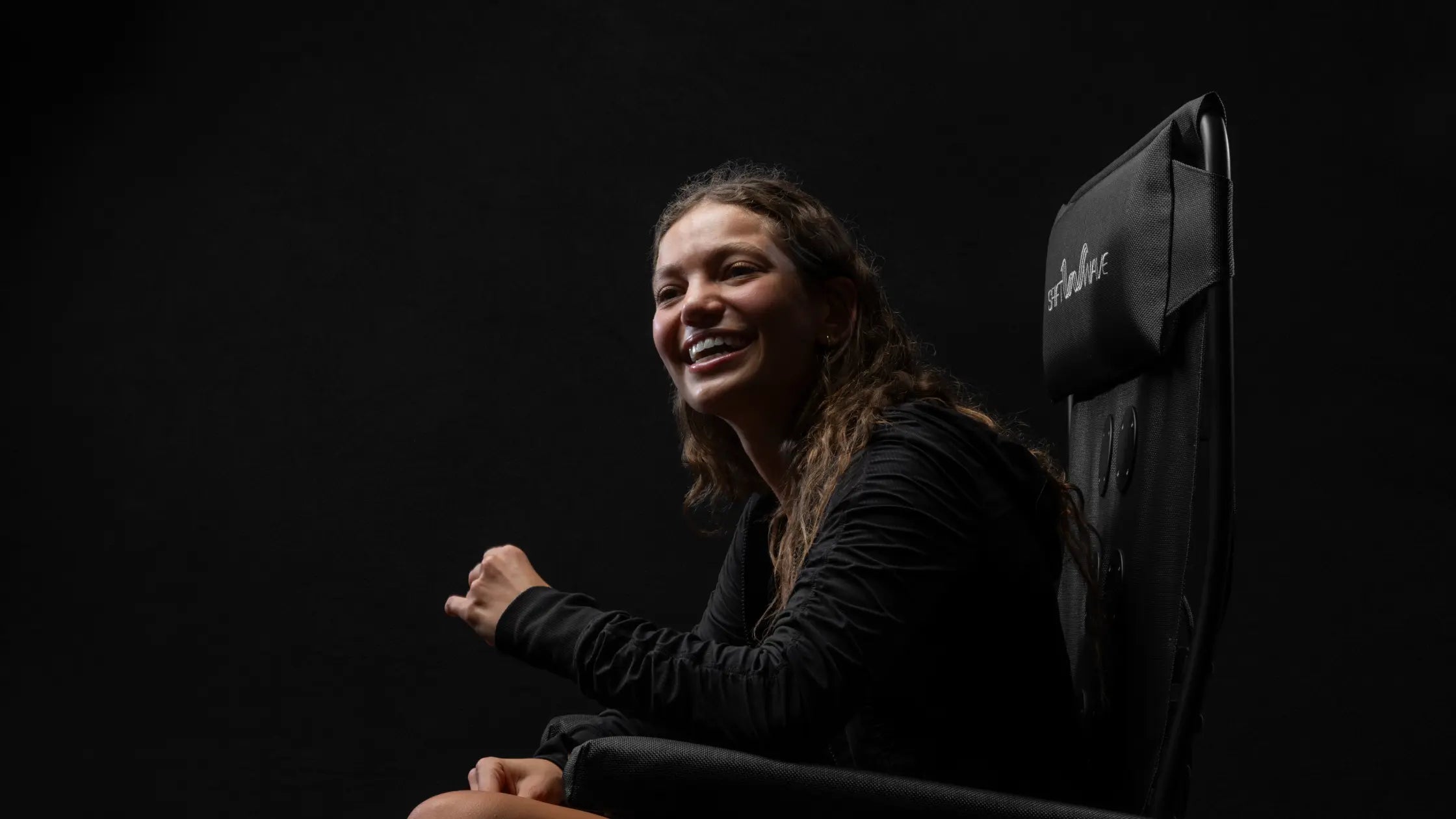
“I always wanted to get into meditation, but I never was able to comply until I got the Shiftwave.”
She began using short sessions before golf and before sleep.
This is where the mental game of golf becomes practical, not something you think about, but something you can feel and repeat.
“The golf protocols have been spectacular for my golf swing.”
Not because they changed her mechanics directly.
But because they changed how she showed up to the swing.
“It’s helped me breathe during my swing, keeping my core tight, keeping me stable.”
Her rhythm shifted:
- inhale on the backswing
- exhale through the ball
“That ball is going so far.”
And off the course:
“I’m sleeping through the night. The next day I feel so good because I did the Shiftwave the night before.”
The Throughline
These are very different contexts:
- A professional in a tournament moment
- A committed everyday golfer
But the pattern is the same.
Not more effort.
Not more instruction.
A different state, one that can be accessed consistently.
How to Improve the Mental Game of Golf
Improving the mental game of golf is less about adding more techniques and more about creating repeatable ways to regulate your state.
In practice, this shows up as:
- Preparing mentally before a round
- Resetting between shots
- Managing pressure during key moments
- Recovering quickly after mistakes
The challenge is not knowing what to do,
it’s being able to do it when it matters.
Where This Shows Up on the Course
This is not theoretical. It already shows up across the game:
- Pre-round → arriving present
- Between shots → maintaining composure
- After mistakes → resetting quickly
- Weather delays → turning downtime into recovery
- Post-round → downshifting and recovering
Even in structured environments, this is becoming part of how players prepare and perform.
Beyond the Player: Clubs and Coaches
This doesn’t just impact performance.
It changes how the entire golf experience feels.
Clubs are starting to recognize that members are not just evaluating the course.
They’re evaluating the day.
- Do they arrive centered?
- Do they stay steady under pressure?
- Do they leave feeling better than they arrived?
When that happens consistently:
- engagement increases
- time on property increases
- perceived value rises
A New Layer of the Game
For decades, golf has focused on:
- technique
- equipment
- physical conditioning
But there is another layer.
Less visible.
But just as important.
State.
Closing Thought
That moment at The Players wasn’t a product story.
It was a signal.
That even at the highest level of the game,
performance is not just built through repetition.
It’s shaped by the state you bring into each shot.
Explore Further
If you’re looking to improve the mental game of your golf, whether as a player, coach, or club:


How to Create Sustainable Change Without Relying on Motivation
Shiftwave® Expands into Europe with BLACKROLL® — A Shift in How Performance Is Approached