

There is a moment at the end of the day when nothing is technically happening anymore.
- The last meeting is over.
- The laptop is closed.
- The commute is done.
- The house is quiet, or loud, or full of people who need you.
But inside, the day is still moving.
- Your body is still holding the pace.
- Your mind is still replaying the conversation.
- Your shoulders are still slightly raised.
- Your attention is split between where you are and what already happened.
This is one of the most overlooked parts of stress.
It does not always end when the stressful moment ends.
Sometimes, stress follows you into the next environment.
The body does not always get the message that the day is over.
Modern work and life rarely come with a clean ending.
There is no physical finish line. No clear signal that says: you are safe to stand down now. The nervous system can move from an inbox to traffic to dinner to bedtime without ever receiving a real pause.
So the body carries the day forward.
- You may notice it in the way you answer a simple question.
- In the way noise feels sharper than usual.
- In the way you reach for your phone even though you are exhausted.
- In the way your mind wants to urgently start preparing for tomorrow before today has even ended.
This is not a character flaw.
It is a sign that the system may still be activated.
How you feel is how you show up.
Most people are aware of this without needing an explanation but:
- When you feel steady, you listen differently.
- When you feel clear, you decide differently.
- When you feel restored, you relate differently.
- When you feel overloaded, everything has less space around it.
The same child, partner, friend, colleague, or task can feel completely different depending on the state you bring to it.
That is why stress recovery is not only personal.
It affects the room you walk into.
It affects the tone you carry about you.
The patience you have access to.
The choices you make quickly.
The way you react when life asks for more than you planned to give.
A reset is not about becoming a different person. It is about creating the conditions to return to yourself before the next part of life begins.
The transition matters.
We often think of recovery as something that happens at the end of the evening, once everything is done.
But by then, the stress of the day may have already shaped the evening.
- The transition between work and home matters.
- The transition between a hard call and the next meeting matters.
- The transition between parenting, caregiving, training, travel, or performance matters.
These moments are small, but they decide a lot.
Without a transition, the body can treat the next moment as a continuation of the last one.
A reset creates a hard boundary that ringfences the stress.
Not a dramatic one.
Not a complicated one.
A real one.
A few minutes where the system is no longer being asked to process, perform, decide, answer, explain, or absorb.
A few minutes to come back to baseline.
Why ordinary rest does not always feel restful.
Sometimes we try to rest, but the body does not fully follow.
- You sit on the couch, but your mind keeps scanning.
- You lie down, but your body still feels wired.
- You turn on a show, but part of you is still bracing, or still ruminating.
- You scroll because you are tired and want to be mindless, but the input keeps your system engaged.
This is one of the reasons stress can be so frustrating. You may be physically still, but not actually settled.
Rest is not only the absence of activity.
Rest also requires a shift in state.
That shift can be hard to access when the day has built up too much momentum.
Shiftwave as a transition ritual. From stress to calm and presence.
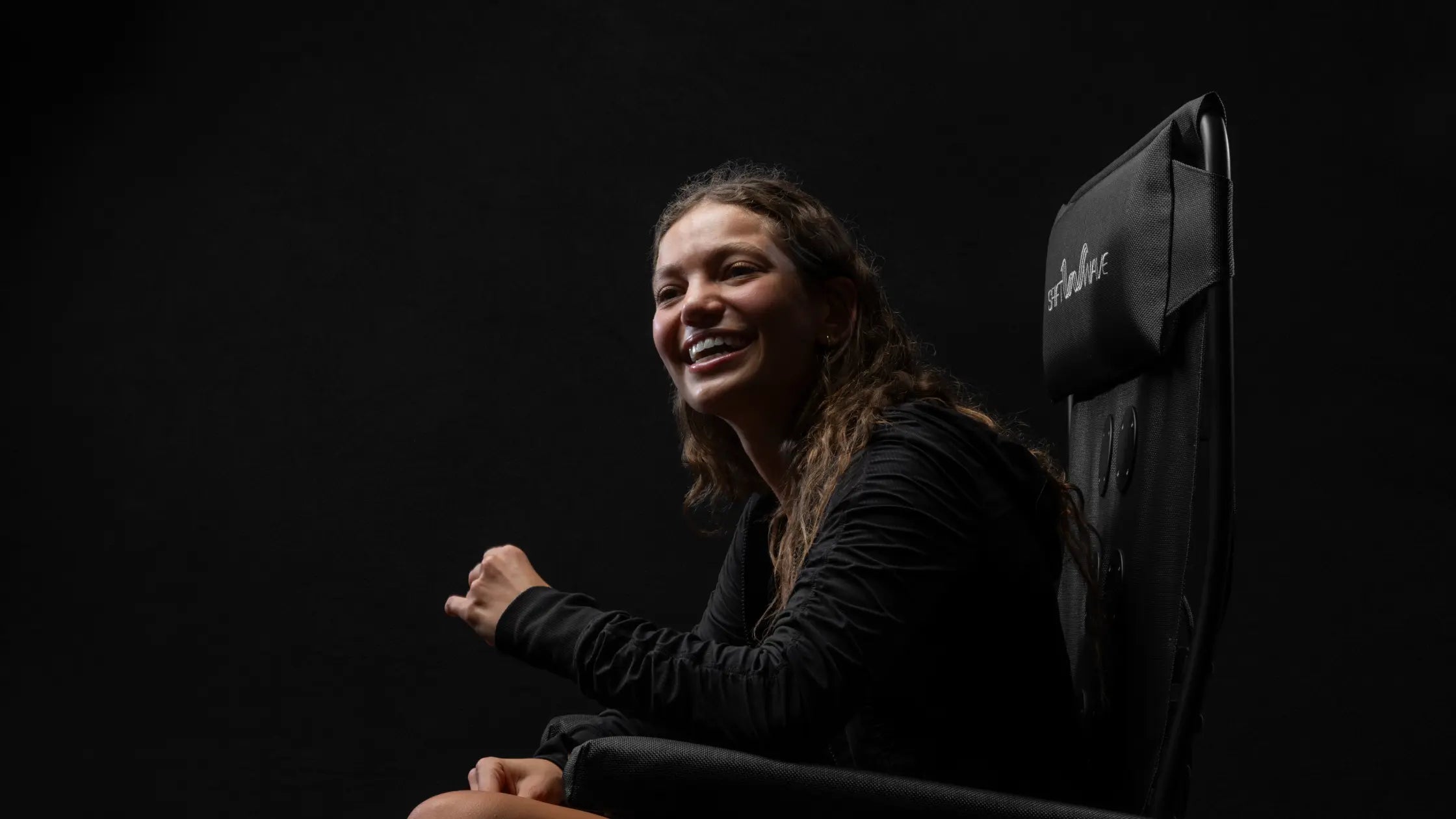
Shiftwave is designed for the moments when you need a structured way to reset.
A session creates a guided environment using synchronized vibration, audio, breath cues, supported positioning, and reduced visual input. The experience is designed to help you step out of the noise of the day and return to a steadier state.
That makes Shiftwave useful not only as a recovery tool, but as a transition ritual.
- Before you walk into the evening.
- Before you move from pressure into presence.
- Before you ask your body to sleep.
- Before you try to be available to everyone else.
The session does not ask you to perform what being calm feels like. It gives you a place to practice returning to that calm.
For some people, that might be 10 minutes.
For others, it might be a longer session when the day has demanded more.
The point is consistency.
A reset becomes more powerful when it becomes part of the rhythm, and your body starts to learn.
Stress does not have to be the state you bring home.
There will still be hard days.
There will still be pressure, responsibility, conflict, deadlines, noise, and moments that ask a lot from you.
The goal is not to remove all of that.
The goal is to build a reliable way back.
- Back to steadiness.
- Back to clarity.
- Back into your body.
- Back to the version of you that can respond instead of react.
Because the way you feel does not just stay contained inside you.
It moves with you.
And that is why reset matters.
Not just for how you feel.
For how you show up.
Create a steadier transition into the moments that matter.
Explore guided Shiftwave protocols designed to help you reset, recover, and return to your day with more capacity.
Book a guided consultation
Explore Shiftwave Pro
FAQs
Why do I still feel stressed after work is over?
Stress can linger when the body has not had a clear opportunity to transition out of activation. Even when the task is complete, your system may still be processing the load.
How can I stop bringing work stress home?
A transition ritual can help. This might include a walk, breathwork, quiet time, journaling, movement, or a guided reset session before moving into the next part of your day.
Why does stress affect how I treat people?
Stress can influence patience, attention, tone, and emotional reactivity. When you feel overloaded, it can be harder to respond with the steadiness you would normally have.
Is rest the same as reset?
Not always. Rest is often the absence of activity, while reset implies a shift in state. You can be still without feeling settled.
How can Shiftwave fit into an evening routine?
Shiftwave can be used as a transition ritual after work, after travel, after a demanding day, or before bed. The guided protocols offer different session lengths depending on the moment.
Shiftwave is a wellness device designed to support general wellbeing. It is not intended to diagnose, treat, cure, or prevent any disease. Individual experiences may vary.

Stress Isn’t the Problem. Staying Stuck in Stress Is.
A Better Way to Reset When You’re Overloaded